As an Amazon Associate I earn from qualifying purchases.
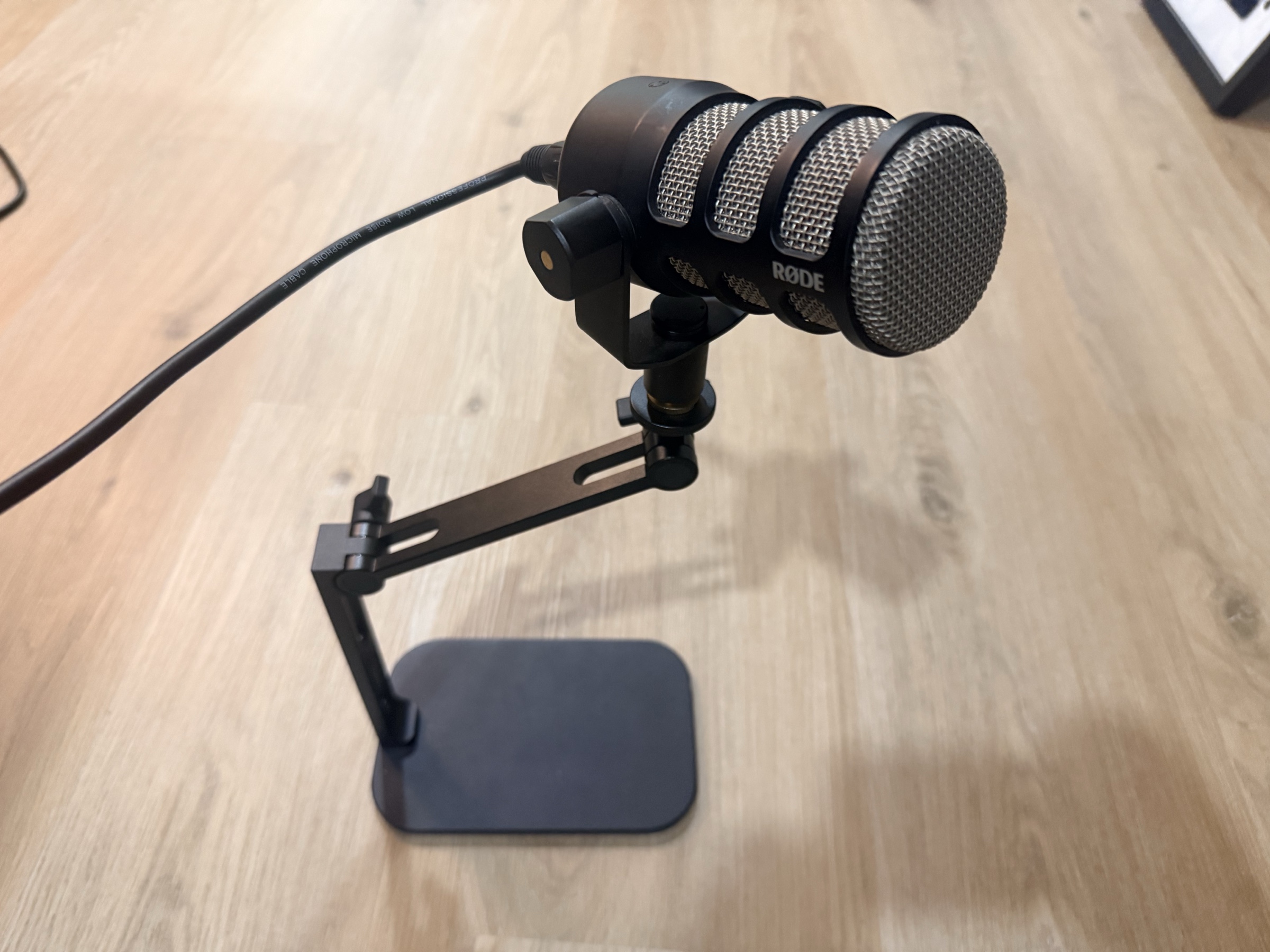
After moving, I somehow lost the large desk-clamped microphone arm I had been using. I needed a replacement for my XLR Rode PodMic, so I chose this heavy-duty stand because it sits directly on the desktop and does not need a clamp.
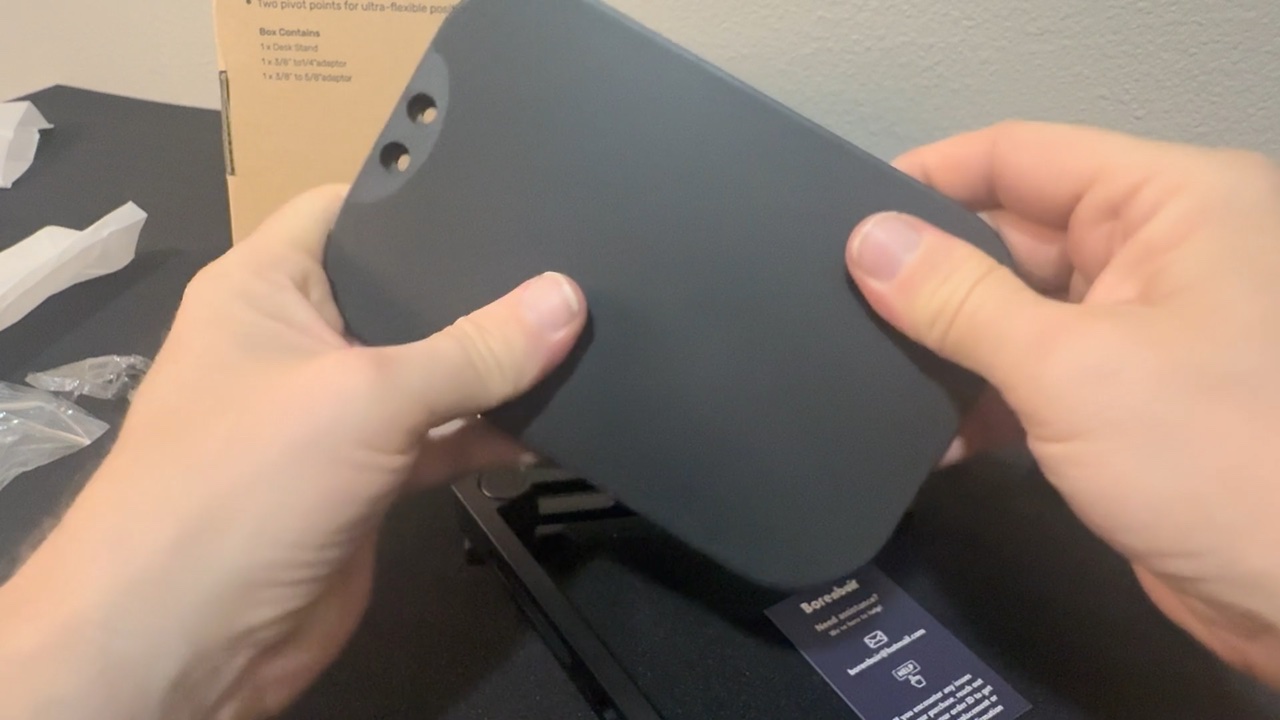
The first thing I noticed was its weight. The box had some heft, and the base felt close to three pounds in my hands. I did not weigh it, so that is only an estimate. According to the listing, the base is cast iron and the arm is steel. The stand feels substantial, with a black powder-coated finish and a rubber-covered bottom.
Assembly was straightforward. I attached the arm to the base with two screws and washers, using the included Allen wrench. My package also included instructions, extra screws, thread adapters, a locking washer for the microphone, and hook-and-loop cable straps. My Rode microphone attached without any trouble.
The joints stood out during setup. Two large knobs let me tighten the arm firmly, and it held my microphone where I positioned it. My previous arm tended to droop, but this one felt much more secure during my initial setup. I could grab the arm and reposition it while seated, then tighten it again.
I was concerned that the stand might not be tall enough because I am 6 feet 4 inches tall. It reached my mouth while I was sitting upright at my desk, so it works for my seated recording position.
The weighted base also took up less desk space than I expected. While recording, I estimated that it measured roughly 5 by 8 inches, but I did not measure it. The listing gives the base dimensions as 7.3 by 4.7 inches.
The base remained stable while I adjusted the arm, and the rubber bottom appeared to grip my desk securely. That reflects my experience on one desktop surface, not a test across different surfaces or microphone configurations.
Cable management works, but it is basic. The cable remains exposed instead of running through a concealed channel. My XLR connector was too large to fit through the arm’s small routing openings, but the included hook-and-loop straps let me secure the cable along the outside. It does not look as integrated as an arm with internal cable routing, but it keeps the cable controlled.
I also typed on my clicky keyboard while recording to check whether typing noise or desk impacts reached the microphone. I could not determine the result during the recording, so I cannot make a claim about vibration isolation or noise transmission.
Based on my initial setup, the stand’s weight, firm joints, simple assembly, and usable height all worked well for me. It occupies some desk space compared with a clamp-mounted arm, but it does not require a compatible desk edge. I plan to keep using it instead of returning to my older arm, even if I find that one after the move.